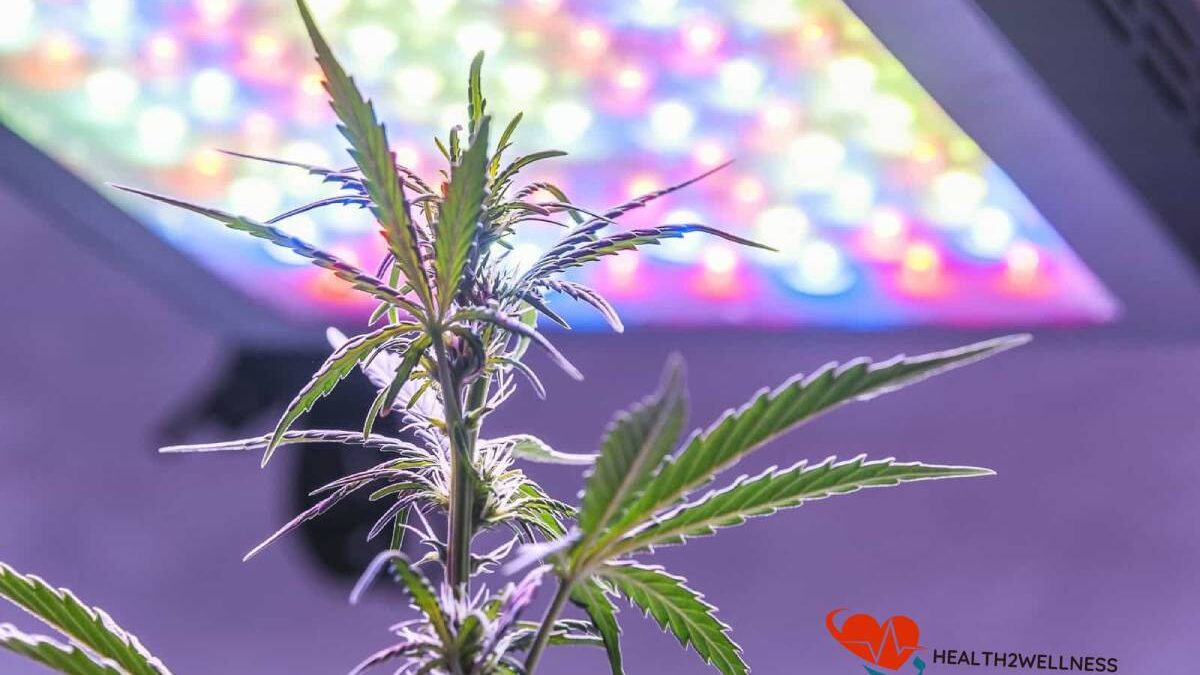
The LED light distance is important for a higher yield, potency and quality of your plants. This guide explains how far your LED light should come from your marijuana plants and why it is important.
Why LED light distance is important
People are switching from fluorescent T5s, the most popular and well-known type of light bulb to LEDs for three reasons.
Increase Yield
LEDs are able to produce a greater yield per square meter compared to other sources of light. Proper lighting will optimize photosynthesis, which in turn can improve flower production.
The type of light will not be enough to boost yields – the distance between the light and your cannabis plant must be perfect at every stage, from germination through seedlings to vegetative growth to flowering.
Increase Potency
THC (short for tetrahydrocannabinol) is the chemical responsible for most of marijuana’s psychological effects. Cannabis with high THC levels is used to treat nausea, arthritis and muscle spasms. It can also be used to treat multiple sclerosis.
LED grow lights can be programmed to control how the cannabis plant will grow, flower and how much resin is produced. It is only during the flowering phase that it is possible to improve potency. Controlling the distance between the LED lights and the light spectrum during this phase will not only result in a higher overall yield but also harvests that have the highest THC levels (which are more valuable on the market).
Light burns and nutritional deficiencies can be prevented
To prevent light burn, it is important to keep LED lights at a safe distance from your cannabis plant. All parts of the cannabis plant can be consumed, so you don’t want to risk any leaves, flowers or stems being burned by too much light. This is a completely preventable issue.
It is harder to prevent nutrient deficiencies. You need to know when to adjust the LED lighting. Your cannabis leaves will not turn yellow, and the photosynthesis rate of your plant won’t decrease at an alarming rate.
Cannabis LED light distance by Growing Stage
There are many LED light options for indoor cannabis cultivation. This is, of course, a “problem” that most growers will welcome, especially those who started growing cannabis years ago when it was not legalized in many states.
As a guide you can use these estimations based on your marijuana plant’s maturity or the stage of growth.
The seedling stage is the first stage of development.
The light intensity required for sowing (the process of placing seeds in soil) is zero or very low. Once the roots have firmly established themselves in the soil, gradually increase the intensity and distance of the LED lights.
As seedlings are fragile, they should be treated as such. Cannabis plants do not need high LED light intensity during this period. The soil can dry out quickly if the lights are placed too close to the bed. During the seedling stage, the general recommendation is to place the lights between 24 and 36 inches away from the topsoil.
Vegetative stage:
By this time, your cannabis plant is more established and doesn’t need intense lighting. You can encourage stronger roots by increasing the intensity of the light and bringing it closer to the plants. During this stage of maturation, you can place LED lights anywhere between 20 and 36 inches above the plant.
This is the time when your plants will grow the fastest, so be on the lookout for signs that may indicate that you are using too much (or not enough) light and adjust as necessary.
Flowering stage
For the flowering stage, LED lights should be placed 16-35 inches above your plant. Your marijuana plant will be taller and have larger leaves when it is nearly established.
It is important to adjust the distance of your LED lights because if you leave them too close, they could damage your plants, cause stunted growth or even kill them. The plant may also suffer from stunted growth if the LED lights are too far away.
The LED lights are best placed between 14 and 36 inches above the clones.
When estimating the distance of LED lights, other factors would include the wattage of the LEDs and the size of the LED bulbs.